

DIY First Aid Kit

You don’t have to be a doctor to help yourself, or others, in an emergency. If you have the first aid skills and tools to administer the care required, you will be able to fasten recovery time, minimise the risk of infection, and in some situations, save a life.
Before you embark on your upcoming holiday, use this checklist as a guide to things you may need in your travel first aid kit. You may need less or more, depending on your travel destination (don’t forget to take into account the remoteness of your visit).
Check with your family doctor or local pharmacist if you aren't sure what items are best for you while travelling.
A dry, cool location is the best storage environment for your travel first aid kit. Make sure it is easily accessible in your suitcase/backpack and that everyone you are travelling with knows where the first aid kit is located. Before embarking on your travel journey, check the contents of your kit to ensure creams are in date, bandages are properly sealed and the torch is working with spare batteries. If an item is used from your first aid kit, don’t forget to promptly replace it.
Tip: If you are travelling internationally by air, be sure to pack your first aid kit in the checked luggage of your flight. Many of the items will not be permitted in your carry-on bag.
To be prepared in an emergency, and to learn how to best utilise every item in your first aid kit, Australia Wide First Aid strongly recommends that you take a Australia Wide First Aid strongly recommends taking a one-day first aid course.
Australia Wide First Aid offers CPR and first aid courses in locations Australia-wide, including in:
Disclaimer: This article is for informational purposes only and should not be used in place of advice from qualified health professionals.
May 16, 2014
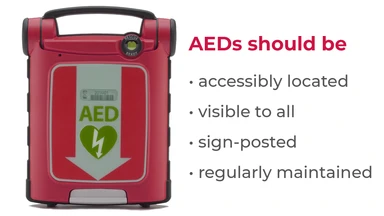
An AED can improve the chance of survival for a sudden cardiac arrest victim by as much as 90%. Without a defibrillator, the odds of survival drop 10% for every minute that passes.

February 24, 2022
First aid is a priority where medical intervention is needed — no matter the location. Signage the world over has been designed so you can recognise and understand it, regardless of the language spoken.
June 24, 2016
Cardiac arrest is catastrophic loss of heart function. If someone in your home suffered a cardiac arrest, would you know what to do? This is why it makes sense to have an AED (Automated External Defibrillator) in your home.