

Best Ways to Effectively Decrease Your Risk of Flu

After being forced out for the last two years by COVID-19 lockdowns and restrictions, the flu has returned to Australia with a vengeance.
Compared to previous years, flu cases are being reported much earlier and in greater numbers. Likewise, though the flu generally only causes mild symptoms, a higher number of this year’s flu cases are resulting in severe symptoms and hospitalisations.
There is no known cure for the flu, and so it is important to understand how to avoid and treat flu symptoms before they result in serious health complications.
Caused by influenza viruses, the flu is a contagious respiratory illness that affects the nose, throat, and lungs. The flu can infect all people regardless of age, gender, or ethnicity.
The flu generally only causes mild symptoms that resolve themselves within a week, including:
However, there are certain groups that are more at risk of developing complications from the flu, including:
People in these groups have a higher risk of developing flu complications like ear and sinus infections, pneumonia, bronchitis, and inflammation of the heart, brain, and other organs.
To avoid serious health complications from the flu, it is best to avoid the flu altogether. One of the safest and most effective preventative measures against the flu is the flu vaccine.
It is recommended that people aged 6 months and over are vaccinated against the flu on an annual basis. This is because influenza viruses can change their surface structure from one year to the next. As such, even if you get the flu or flu vaccination one year, this does not guarantee that your immune system will be able to fight off the flu in the following year.
People who are more at risk of developing complications from the flu are eligible for free flu vaccinations under the National Immunisation Program. This includes pregnant women, as there is no evidence that the flu vaccine can cause problems in expectant mothers nor their unborn babies. To see if you are eligible for a free flu vaccine, contact your state or territory Department of Health.
Another effective way to avoid the flu is to practise good hygiene. This includes:
As we touched on earlier, the flu can shift shape from year to year. As such, you may become infected despite following preventative measures. To relieve mild flu symptoms:
You can also use saline nose drops or spray to help ease a stuffy nose, while a hot water bottle or heating pad can help relieve muscle pain.
Likewise, you can use over-the-counter medications like decongestants or antihistamines to ease symptoms, though you should speak with your doctor or pharmacist beforehand to see which medication is right for you, if any. Antibiotics are ineffective against the flu, as they are designed to treat bacterial infections, not viral ones.
You should seek medical attention if your symptoms get worse instead of better, and if you experience any of the following symptoms:
The flu is a contagious respiratory illness that affects the lungs, nose, and throat. Though it typically only results in mild illness, it can cause severe symptoms and health complications in certain high-risk groups.
To avoid serious complications from the flu, it is best to avoid the flu altogether. The safest and most effective ways to prevent the flu is to receive the flu vaccination, and to maintain good hygiene practices.
Despite your best intentions, you may not be able to dodge the flu. To learn how to identify and manage flu symptoms, head to a first aid course near you.
June 7, 2022
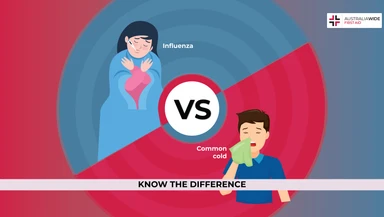
Here in Australia, cold and flu season is well and truly upon us. Though the common cold and the flu have many similarities, there are some key differences to look out for to guide your treatment and recovery.

May 23, 2022
Monkeypox is a rare condition that is caused by the monkeypox virus. Its symptoms include fever, headache, and skin lesions. Cases of monkeypox have now been detected in Australia and across several European countries.

February 24, 2022
During this COVID-19 pandemic, our First Aid training continues in line with government guidelines. We make every attempt to safeguard the health and safety of our staff and students.